
SEO Insights
Google Preferred Sources: setup choices and measurement for Hong Kong websites
A reader wants to find your publication again. Is the next step an email subscription, a social follow, or choosing the website as a preferred source in Google? The wording matters because those actions do different things.
Preferred Sources lets readers express a source preference in supported Google experiences. A website can provide an entry point to that choice. It cannot use the button to grant itself a ranking improvement or claim that every visitor has joined.
What is available, and what must still be checked?
As checked on 18 October 2026, Google’s Preferred Sources documentation describes global availability for Top Stories in Search languages. It separately sets conditions for AI Mode and AI Overviews, including availability of those features and inclusion of the website in Search generative AI features.
That does not mean every query produces those surfaces, or that every Hong Kong account has the same interface. Establish the relevant product conditions before promising any particular appearance.
There are also two practical checks for a publisher:
- Use the right source level. The source tool accepts a domain or subdomain, not a standalone website subdirectory.
- Look for the website in the source tool. Adding a link or script is not proof that a missing site has become eligible.
Choose the integration the website can maintain
| Option | When it can be useful | What the team needs to check |
|---|---|---|
| Standard JavaScript button | The template can load Google’s publisher library | Loading, language, keyboard use and the return journey |
| Custom interactive button | The action needs to fit an existing interface | Official implementation, states, failure handling and design requirements |
| Deeplink or linked image | The CMS cannot use the interactive button, or a simple link suits the page | Correct domain, clear destination and behaviour on phones |
| No entry point yet | The source is unavailable or the integration cannot be maintained reliably | Eligibility, publishing purpose and technical constraints |
Google recommends its standard JavaScript implementation. A custom implementation adds responsibilities for the website team; a deeplink provides a different route into Google’s source-preference flow. None of these options removes the reader’s choice.
Before loading a third-party library, review the page’s performance, Content Security Policy and applicable consent setup. Those are implementation considerations for the website, not a claim that the feature itself requires the same consent banner in every situation.
Why YUSIHK currently uses a deeplink
The YUSIHK footer links to Google’s source-preference tool for our domain rather than loading the publisher button script across the whole site. This keeps that particular frontend dependency small. It does not prove that a visitor who clicks has completed the choice.
If the implementation changes later, review the complete flow and the meaning of any available completion signal. Do not assume a custom button measures the same action as an ordinary outbound link.
Source preferences, Discover interests and personal data are separate
Google’s personalisation announcement discusses source choices, Discover interests and news briefings. Their appearance in one announcement does not give a website one control over all of those experiences.
| Reader action | What the website can explain | What it should not promise |
|---|---|---|
| Choose a preferred website in Google | The link opens Google’s source settings | Better organic rankings for all searchers |
| Adjust Discover interests | The reader can use the controls available in their interface | The publisher can set those interests or guarantee feed placement |
| Use a personalised or connected-app feature | The reader makes the choice under that product’s conditions | Adding a source shares Gmail or calendar data with the publisher |
Choosing a preferred source is also different from joining a website’s mailing list. If the page provides both actions, label each one clearly. For creator identity and social-account aggregation, see the separate Search profiles eligibility guide.
Why a page return is not a completed addition
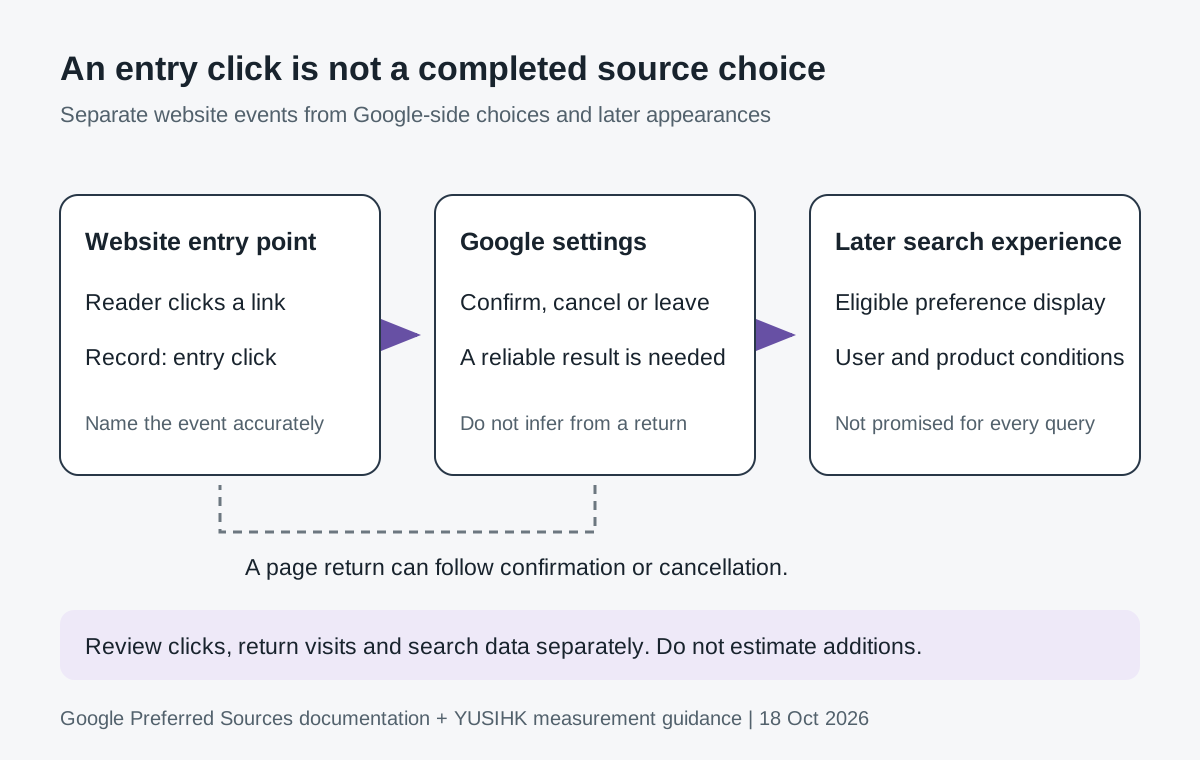
A reader can return after confirming, cancelling, closing the flow or using browser navigation. An outbound-click event should therefore have a name such as “open Google source settings.” Do not label it “source added” unless the actual integration supplies a reliable result with that meaning.
A sensible journey review uses a test account controlled by the person doing the check. Follow both a confirmation and a cancellation path, then inspect the return location, mobile reading and keyboard behaviour. This is a recommended method, not a claim that this article performed those account actions. Do not make preference choices on visitors’ behalf.
If the Google entry point fails, the article should remain readable and the site should still offer ordinary navigation and contact options.
Measure audience behaviour without inventing a Preferred Sources result
Record the page containing the entry point, the implementation date and the event definition. Observe use of the entry point separately from returning visits, article reading and service-page interactions. Keep a note of other changes, such as a new title or a promotion, because they may also affect audience behaviour.
Search Console website data should not simply be renamed “Preferred Sources performance.” Without a distinguishable source of evidence, do not estimate additions, AI citations or ranking gains from button clicks. A single selected source or screenshot does not establish a business result.
For Hong Kong publishers, useful preparation includes a consistent publication identity, a clear explanation of the action and an implementation the site can maintain. Review phones, desktop browsers, signed-out behaviour and relevant languages, while leaving the reader in control of account choices.
To connect this with the website’s wider search journey, read our English Google SEO guide or the English GSC Connect guide. If the issue involves implementation or measurement definitions, contact YUSIHK with the page URL and the action you intend to measure.
Sources checked: 18 October 2026. This article explains the implementation and measurement boundaries; it does not claim a traffic improvement from this update.