
SEO Insights
Google Search profiles: eligibility and practical limits for Hong Kong publishers
A Hong Kong publishing team sees an announcement that Google has lowered the threshold for Search profiles. Before counting followers, it needs to check the supported countries. An audience large enough to meet one requirement does not establish eligibility for the whole product.
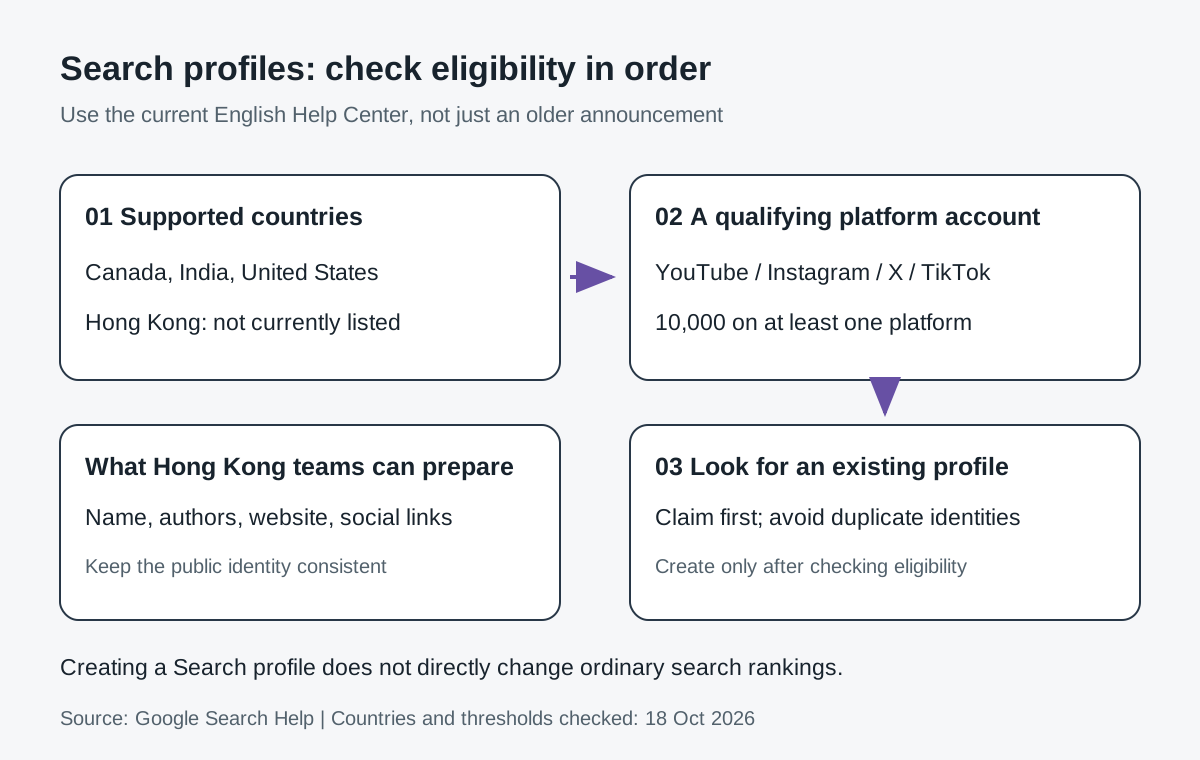
As checked on 18 October 2026, Google’s English Search profile creation page lists Canada, India and the United States. Hong Kong is not listed. The September announcement discussed an earlier US update. Read the current eligibility page and the actual application flow before treating an older announcement, or a different language version, as the complete rule.
A Search profile brings a content identity together
The profile connects information and content associated with a creator, publication or brand across platforms. For readers, that can make it easier to recognise who is publishing. It does not replace a website’s explanation of its services, authors, contact details and sources.
Google’s September update covered management of multiple brands, changes to article presentation and a lower eligibility threshold. For a publishing group, the practical issue is keeping identities and account ownership clear. For a Hong Kong service business, the first question is whether this is a product it can currently use and needs.
What does the 10,000-follower requirement mean?
The English help page specifies a qualifying account on at least one supported content platform, with a 10,000 subscriber or follower minimum for YouTube, Instagram, X or TikTok. Adult account ownership and content-policy conditions also apply. Do not add smaller audiences across platforms and assume that this satisfies a requirement for one qualifying account.
Consider a hypothetical Hong Kong publication with a qualifying YouTube channel. That answers the audience-size question, but the publication must still establish that it meets the geographic and identity conditions. Buying followers or purchasing a supposed “ranking activation” service does not resolve those conditions.
Search profiles, Business Profiles and knowledge panels have different jobs
| Surface | Main purpose | First question for the team |
|---|---|---|
| Search profile | Bring together content and links for a creator, publication or brand identity | Is the identity eligible, and does a profile already exist? |
| Google Business Profile | Manage local Search and Maps information for an eligible business | Is this a real business that meets the separate business eligibility rules? |
| Knowledge panel | Present Google’s information about an entity | Is the information accurate, and is an appropriate claim or correction process available? |
One brand may be connected with all three, but the management paths are not interchangeable. Google also explains that an eligible identity with a knowledge panel may already have an automatically generated Search profile. Check for that before creating a duplicate. Business Profile eligibility should be checked against its own official guidelines, not a creator’s follower count.
Check for an existing profile before creating another one
Use an account the organisation can maintain and hand over responsibly. Look for the existing identity, then follow Google’s claiming instructions to check the connected platforms. If no existing profile is available, use the creation process only after confirming eligibility. Google’s management guide covers later changes; the available options may depend on the signed-in interface.
For multiple publications or programmes, record which identity each profile represents, which social accounts belong to it and who controls account recovery. Centralised management should not turn different brands into a misleading combined identity. An agency can help organise public information, while the organisation retains control of the accounts.
Does creating a profile improve search rankings?
Google’s creation-page FAQ says that profile creation does not directly affect content rankings in Google Search. Following an identity through its profile may affect what that person sees in Discover, but that is not a promise of organic ranking gains or AI citations.
The official material also does not provide a Schema shortcut that activates Search profiles. Clear author, company and social information helps readers verify identity; it cannot substitute for product eligibility. If your question is how a reader can choose a website as a preferred source, use our separate Preferred Sources guide instead.
What a Hong Kong team can prepare now
With Hong Kong absent from the checked creation-page country list, start by aligning the public identity: the name, biography, publication, authors, website and relevant social accounts. This also helps people who search the brand and compare information across platforms.
A team operating in a supported market should ask its responsible account holder to verify the current conditions and application flow. Changing location details solely to evade a restriction is not a sound eligibility process. For an existing profile with incorrect information, use the official claiming or support path.
If the broader problem is inconsistent public business information, our English GEO service scope explains the review of brand entities and supporting pages. Prepare the official website, the relevant platform links and the specific information that needs correction.
Sources checked: 18 October 2026. Countries and eligibility conditions can change; reopen the English help page before applying.