
SEO Insights
Universal Cart and UCP: transaction data and merchant responsibility
A shopper asks an assistant to find a product that works in Hong Kong, costs less than a stated budget and arrives before Friday. Comparing product names is only the beginning. Someone still has to establish the variant, stock, delivery promise, final amount and authority to place an order.
For a merchant, agentic commerce therefore raises a practical question: can the systems supporting a sale agree on the promise being made? The Universal Commerce Protocol (UCP) provides a way for commerce systems to exchange capabilities and information. It does not make incorrect product data reliable. The acceptance methods below are YUSIHK’s analysis, not evidence of a completed Google integration or a customer outcome.
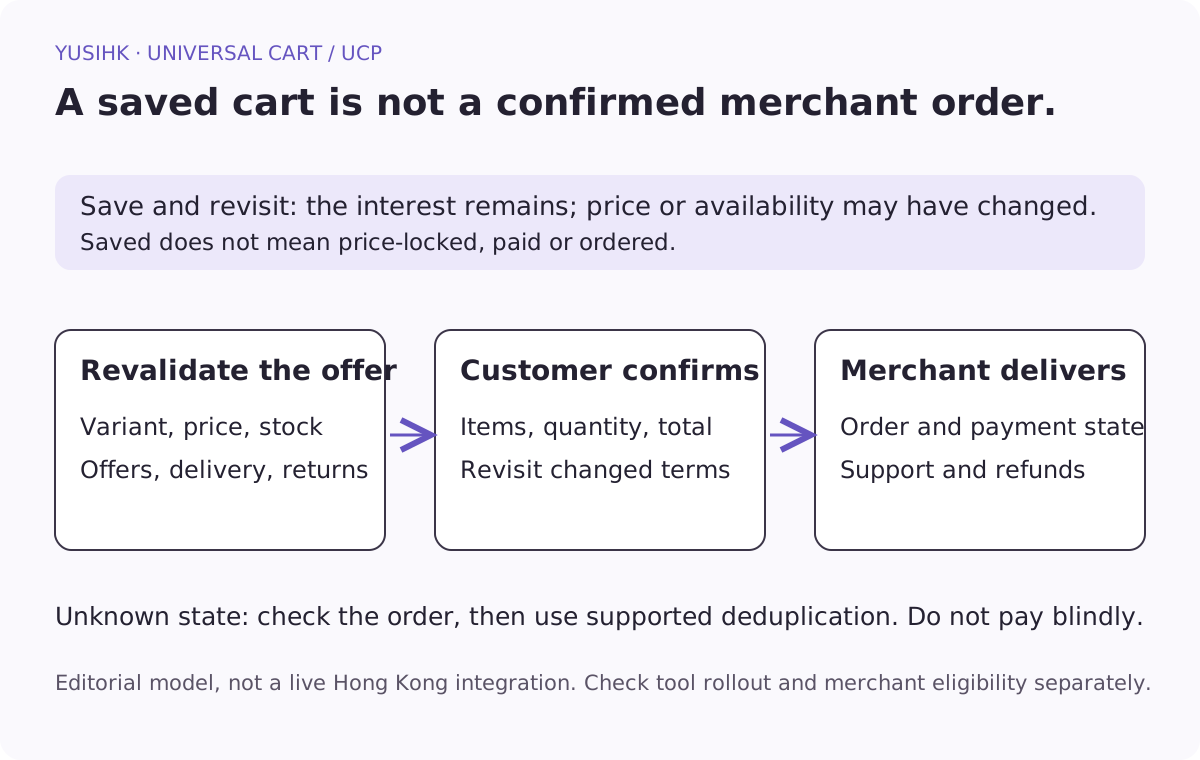
Universal Cart changes the shopping context, not the need for an order
Google’s 15 October 2026 announcement introduces Universal Cart in the United States. It brings products from different merchants into a saved shopping context, with purchase routes involving Google Pay or a handoff to a merchant’s cart where supported. Saving an item is not the same as confirming an order.
Keep that announcement separate from Merchant Center’s UCP checkout eligibility, which currently covers eligible products and selected merchants in the United States, Canada and Australia. The launch market of a consumer tool does not establish that a particular merchant qualifies for a checkout integration. Do not sell it as an already-open Hong Kong channel.
A saved product may no longer have the same commercial conditions
Imagine someone saving a variant on Monday and returning on Friday after its promotion ends and one colour sells out. This is a hypothetical acceptance scenario, not a Universal Cart transaction we performed. On resumption, check the product identifier, variant, currency, stock, discount eligibility and final payable amount. A saved view should not be treated as an unlimited promise of an earlier offer.
| Handoff point | Fact to establish | Useful acceptance record |
|---|---|---|
| Revisit a saved item | Same variant; current price and availability | Product identifier, source and observation time |
| Apply an offer | Membership, minimum spend, stacking and expiry | Applicable rule or reason for refusal |
| Start checkout | Items, quantities, delivery conditions and total | What the shopper saw and confirmed |
| Receive an order | Merchant order reference and known payment state | Order-to-payment reference mapping |
| Request support | Who handles delivery, cancellation and refunds | Contact route, status and responsible team |
This is a suggested merchant test record, not a promise that Google exposes every field. Establish what the actual platform makes available, and avoid copying payment credentials or unnecessary personal information into audit spreadsheets.
Saving products from several sellers also does not justify promising combined delivery or one returns policy. The launch explanation retains merchant confirmations and support. Explain which merchant sells each item and where the shopper should take a fulfilment or refund question.
Describe capabilities without mistaking the protocol for SEO
The UCP core concepts describe capability discovery and interaction between platforms, businesses and payment participants. A protocol integration is separate from making a product page understandable in search. Google’s product structured-data overview is a useful reference for the public product representation; neither document makes a schema change a guarantee of checkout participation or rankings.
Start with the commercial questions the systems must answer: what item, under which conditions, to which destination, with whose confirmation? If the catalog, website and commerce backend disagree, exposing another endpoint does not resolve the disagreement. Our English SEO services overview explains the broader website foundation; the English Google SEO guide is the starting point for search rather than transaction integration.
Keep three connected records: product, promise and permission
The product record identifies the item: brand, model, applicable GTIN or MPN, variant, specifications, images, compatibility and limitations. “Suitable for professionals” is not a substitute for voltage, plug, operating-system or warranty-region facts. Preserve a stable identifier across the catalog and the customer-facing representations.
The commercial-promise record covers the offer: current price, stock, membership conditions, promotion dates, destination coverage, delivery cut-offs, remote-area fees, collection choices and returns conditions. Give each rule an owner and a source. A product page and support agent should not give different answers about an opened item or an excluded delivery area.
The permission record establishes what the customer agreed to: item, quantity, total, destination and the relevant action. A substituted model, delay or newly non-returnable condition may require another decision. Do not use a broad request to buy as authority to silently accept a materially different deal. This is a design principle for an integration, not legal advice or a claim that the protocol automatically captures every required consent.
Website changes can also affect the route back from search or another interface. The English website-handoff article explains preserving the visitor’s task rather than simply returning everyone to a homepage.
Five questions that reveal a broken data chain
Use a controlled test environment or read-only records, not real unapproved purchases. The following are proposed tests, not results from customer accounts:
- Can it arrive on Lantau tomorrow? Check coverage, cut-off time, surcharges and the promised date, rather than accepting “Hong Kong delivery.”
- Does it fit the existing model? Require the compatibility rule and version, not a guess from a similar name.
- Can membership pricing combine with the code? Establish eligibility, stacking rules, expiry and the resulting total.
- Can an opened item be returned? Locate the condition, time window, method, fee and refund arrangement.
- Can two units be ordered now? Check quantity, stock, total and confirmation before any irreversible step.
Compare answers across the product page, catalog, checkout and support process. When they disagree, identify the source that should control that fact and the delay that allowed the mismatch. Do not claim that this comparison establishes Google eligibility.
Timeouts need a known state, not another blind purchase attempt
A missing success screen does not prove that no order exists. In a test integration, rehearse checking order state before using the platform’s supported deduplication and retry mechanism. Escalate an uncertain payment state rather than guessing whether to charge again. Never ask an assistant to make a real purchase merely to demonstrate an example in an article.
The same discipline applies whether the store uses a hosted platform or custom code. The product team owns identity, the inventory system owns stock, the commercial owner maintains offers, and the order/support systems must preserve the handoff. Platform choice changes implementation effort; it does not remove the need to agree on responsibility.
A useful month of preparation can finish without a live UCP launch
In the first week, select a small product set and one realistic customer journey. Name the source and owner of each fact. In the second, compare public pages, product data and backend values, recording mismatches and update delays. In the third, rehearse expired offers, unavailable stock, delivery exclusions, uncertain payment states and cancellation handling without making real unauthorised transactions. In the fourth, assess the actual target market, participation conditions, platform support and maintenance cost before deciding on an integration.
That work improves the store’s ability to give consistent answers even if no additional Google checkout channel becomes available. It does not establish a measured sales uplift. For a specific review, contact YUSIHK with a product, its advertised conditions and the point where the answers diverge. The English GEO service explanation describes the separate role of clear, source-backed website information.
Sources checked: 18 October 2026. Examples are proposed acceptance tests, not results from live cart, payment or customer-account experiments.