
SEO Insights
After AI Mode helps a guest choose a hotel, what must the website explain?
Imagine a traveller choosing a hotel in AI Mode, then opening a booking page that has lost the selected dates and shows a different price. The difference might be tax, breakfast, occupancy or a cancellation rule. Before paying, the traveller needs to establish whether this is still the same offer.
Google’s August 2026 travel announcement introduced flight price tracking, points and miles comparisons, and hotel booking in AI Mode. This article looks at information a hotel and its website team can improve. The examples are hypothetical; they do not claim that a particular Hong Kong hotel has integrated with AI Mode or received bookings from it.
Check rollout conditions before assuming a hotel can participate
The August announcement described hotel booking within AI Mode as starting in US English, through specified integrated partners. That does not establish that every Hong Kong hotel can join directly. General access to AI Mode in Hong Kong also does not prove access to the same booking flow.
Confirm the current market, language and integration conditions with the relevant official product information and provider. The website checks below are useful even without that integration: visitors can also arrive through ordinary Search, free hotel booking links or a shared booking URL.
A room name does not identify the entire offer
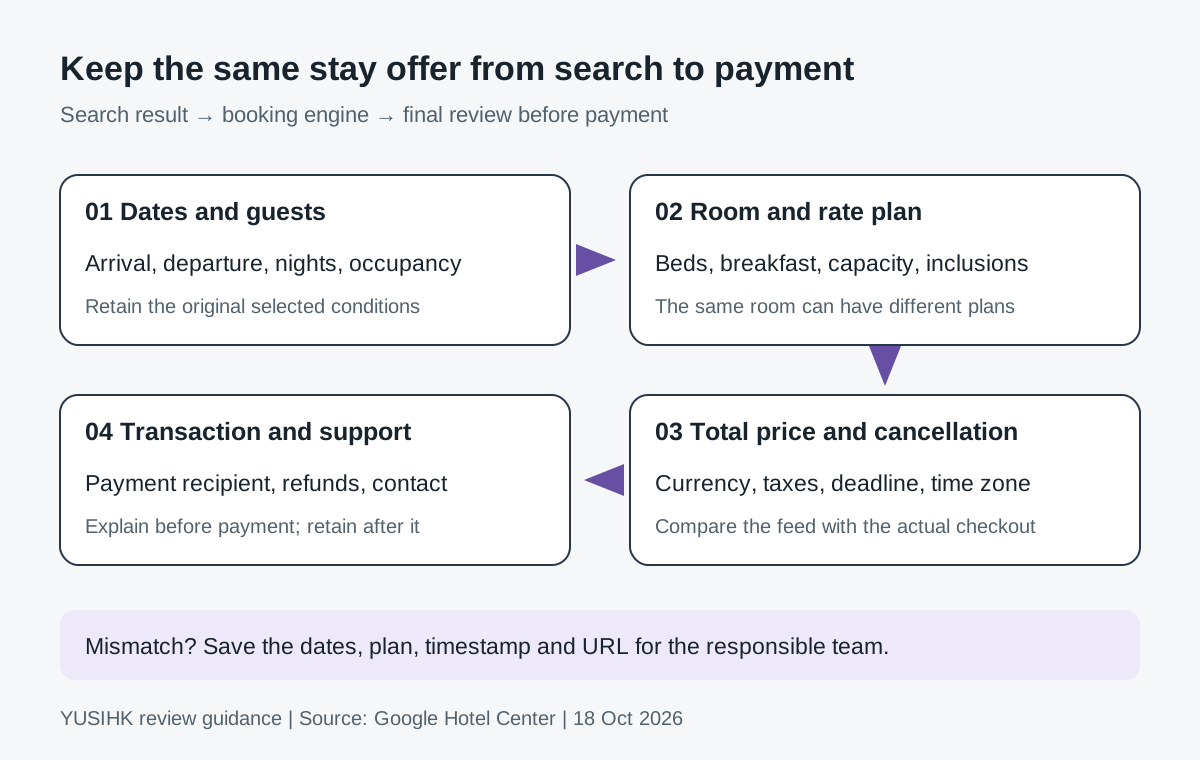
“Deluxe Double” might appear with breakfast, without breakfast, refundable or non-refundable. Comparing only the room label and a starting nightly rate can put different offers side by side. The page needs to identify both the room and the rate plan.
| Information to carry forward | What the booking page should explain | Who can usually investigate a mismatch |
|---|---|---|
| Stay details | Arrival, departure, nights, adults and children | Booking engine or website team |
| Room and rate plan | Bed arrangement, occupancy, breakfast and included extras | Reservations and revenue management |
| Price basis | Currency, nightly and stay totals, taxes and conditions | Revenue management and distribution provider |
| Cancellation and payment | Deadline, time zone, charges, prepayment and refund terms | Reservations and payment provider |
This is a suggested handoff model, not a Google requirement for how a hotel must organise its staff. What matters is that each important field has an identifiable source and someone who can correct it.
Preserve the conditions before investigating a price change
For a hypothetical check, select two adults, two nights and a refundable plan. Record the dates, occupancy, room, plan, currency, timestamp and URL. Comparing a different date or a non-refundable plan later cannot establish that the original offer was wrong.
Google’s Hotel Center Price Accuracy Policy addresses consistency between prices supplied to Google and the booking experience. If a channel manager or booking provider supplies that data, involve the team maintaining the integration. Editing a promotional “from” price on the website alone does not show that the transmitted rate has been corrected.
If availability or price genuinely changes, explain that clearly and let the guest select again. Silently replacing the offer with a more expensive plan, or returning the visitor to a generic home page, makes the discrepancy harder to understand.
The website, booking engine and distribution feed have different responsibilities
The hotel website explains the property, rooms, facilities, location and stay conditions. The booking engine handles available dates, rate plans, payment and confirmation. An integration provider may supply prices and inventory to external channels. Establish where each field originates before changing multiple systems.
Google’s free hotel booking link guidance describes a separate participation route through Hotel Center and providers. It should not be presented as the same eligibility process as booking inside AI Mode. A hotel using a reservation platform can first ask whether Google booking links are already supplied, which offers are included and which reporting is available.
Ordinary SEO work or Hotel structured data cannot replace partner integration. Google’s AI features guidance for websites also provides no special markup that guarantees a recommendation or transaction. Readable, useful and accurate website information remains the work the website team can control.
Identify the transaction and support provider before payment
In the AI Mode booking flow described by Google, the hotel or booking platform remains the merchant of record and handles customer service. The actual booking terms and flow should tell the traveller who receives the booking, who can change it and who handles cancellation or a refund.
If an official hotel website sends visitors to an external booking engine, explain that destination near the booking action. Confirmation pages and emails should retain identifiable booking details and a usable contact route. This article does not determine contractual or legal terms for a hotel; the people responsible for the transaction must verify those details.
Run a reproducible journey check without creating a real booking
Start with one public booking link and record the selected conditions. Follow the journey to the last review step before payment, checking both a phone and a desktop. Do not place a real booking without the relevant transaction authorisation.
Look for concrete failures: dates disappear, the rate plan changes, the total has no explanation or the cancellation policy is difficult to find. Save those observations instead of labelling the whole issue “poor AI traffic.” After a fix, repeat the same conditions to establish whether the handoff improved.
Keep Hotel Center link reporting, website arrivals, booking-engine entries, payments and cancellations separate. GSC clicks are not hotel reservations. An increase in total bookings cannot, on its own, be attributed to AI Mode.
For a review of the handoff between a hotel website and its booking engine, see our English Google Search SEO scope. Provide one problematic URL and the stay conditions used when the problem occurred.
Sources checked: 18 October 2026. Product rollout and partner conditions may change. This article does not promise availability for a Hong Kong account or inclusion of a particular hotel.